
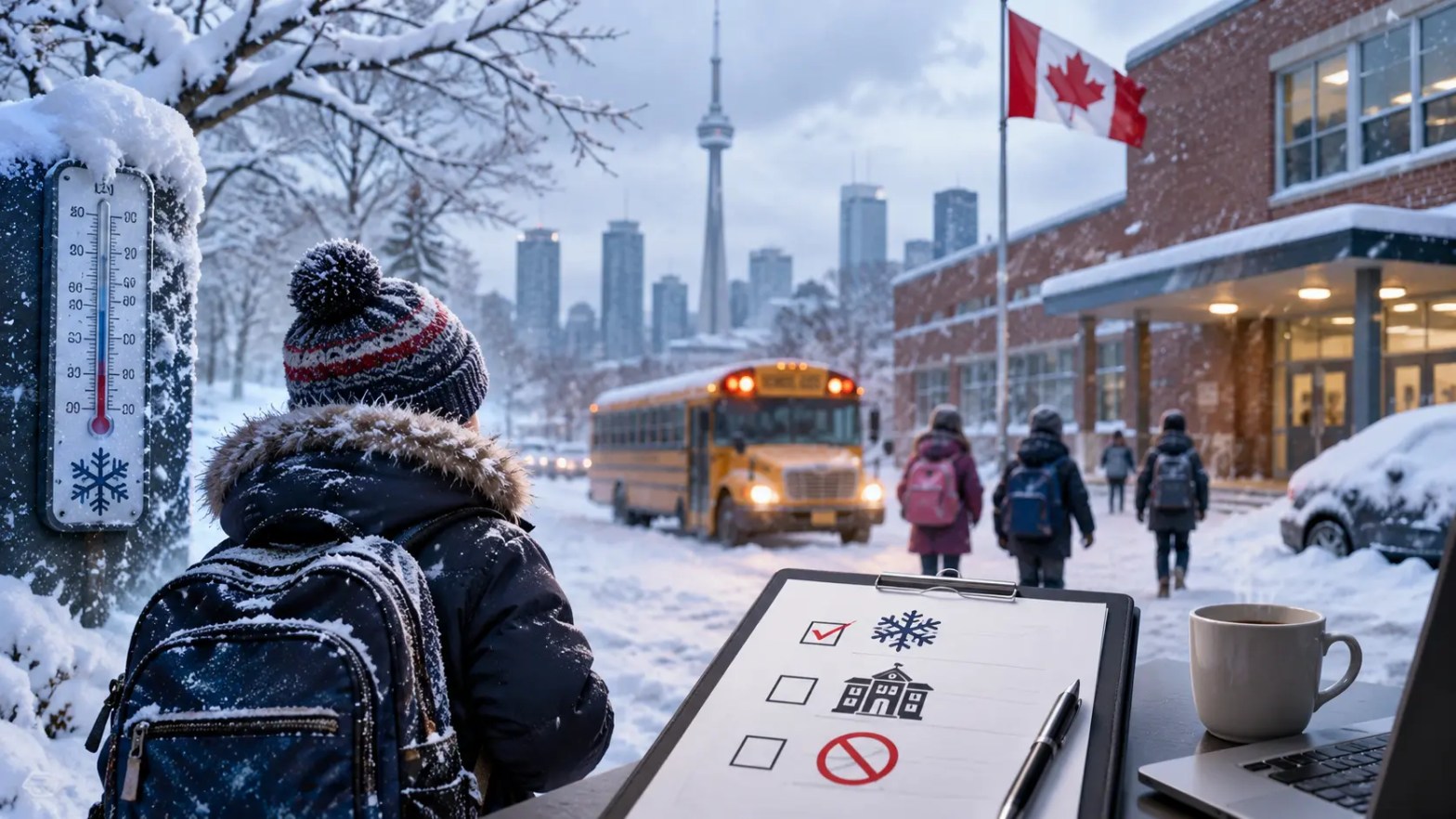
Winter weather can affect school opening decisions in Toronto. Snow, freezing rain, strong winds, and low temperatures can create safety risks for students, families, teachers, and school staff. Toronto schools must assess weather and travel conditions before they decide whether schools can open as planned.
School opening decisions depend on several factors. School boards review weather forecasts, road conditions, public transit, sidewalks, school property, and local safety reports. The decision also considers the expected conditions during arrival and dismissal times. A weather forecast alone does not decide whether a school will open.
For families in Toronto, winter weather can make morning planning difficult. Parents need to know if children should attend school, stay home, or follow a remote learning plan. A reliable winter predictor can help families understand possible risks, but the final school opening decision comes from the relevant school board.
Why Winter Weather Matters for Toronto Schools
Toronto experiences several types of winter weather that can affect school operations. Heavy snow can cover roads and sidewalks. Freezing rain can create ice on streets, school entrances, and walking routes. Strong winds can make travel harder and can create risks from falling branches or damaged property.
Cold temperatures can also affect travel and outdoor activities. Students who walk to school may face longer travel times in severe conditions. School buses may also experience delays because of poor road conditions. These factors can affect the safety of the full school community.
School boards must consider these risks before making a school opening decision. The main goal is to maintain safe access to schools. A school may remain open during moderate snowfall if roads and sidewalks remain safe. A school board may also close schools if weather creates serious travel risks.
How School Boards Assess Winter Conditions
School boards in Toronto review several sources before making a school opening decision. Weather forecasts provide information about expected snowfall, freezing rain, wind, and temperature. Road reports provide information about driving conditions. Transit information can show possible delays that may affect students and staff.
School officials also assess conditions near schools. A weather report can describe general conditions across Toronto, but conditions can vary between neighbourhoods. One area may receive more snow than another area. Some roads may become icy faster because of shade, traffic, or local conditions.
School boards also consider the timing of a storm. A storm that begins early in the morning can create different risks from a storm that begins after school starts. Officials need to assess conditions during student arrival and dismissal periods.
Weather Forecasts and Storm Timing
Weather forecasts play an important role in school opening decisions. Forecasts can show when snow or freezing rain may begin and how long the event may continue. They can also provide expected snowfall totals and temperature changes.
A winter predictor can help families track these conditions. For example, a forecast that shows heavy snow during the early morning may indicate a higher risk of travel problems. A forecast that shows light snow with stable road conditions may indicate a lower risk of major travel disruption.
However, forecasts can change. Weather systems can move faster or slower than expected. Snowfall totals can also differ from early estimates. For this reason, school boards review current information before making a final decision.
Road and Sidewalk Conditions
Road conditions have a direct effect on school transportation. Snow and ice can reduce vehicle control and increase stopping distances. School buses may need more time to complete their routes. Heavy traffic can also increase delays.
Sidewalk conditions also matter. Many Toronto students walk to school or use public transit. Icy sidewalks can increase the risk of falls. Snowbanks can reduce walking space near roads and intersections.
School boards must consider these conditions as part of the overall safety assessment. A school opening decision must account for students who use different forms of transportation.
The Role of Temperature in School Opening Decisions
Temperature can affect school operations in several ways. Very low temperatures can create difficult conditions for students who walk, wait for buses, or transfer between transit routes. Wind can make cold conditions feel more severe.
Low temperatures can also increase the risk of icy surfaces. Water can freeze on roads, sidewalks, stairs, and school entrances. School staff may need additional time to clear entrances and make walking areas safe.
Toronto schools do not use temperature alone as a simple predictor of school closures. Officials consider temperature with other weather factors. Snow, ice, wind, transportation conditions, and road safety can have a greater effect on the final decision.
How Snowfall Can Affect School Opening
Snowfall can affect school operations based on its amount, timing, and impact on transportation. A small amount of snow may have little effect if crews clear roads and sidewalks quickly. Heavy snowfall can create longer travel times and reduce road visibility.
The timing of snowfall also matters. Snow that falls before the morning commute can affect school buses, public transit, cars, and pedestrians at the same time. This can create widespread travel problems across Toronto.
School boards may also consider whether snow is expected to continue during the school day. If conditions are expected to become worse later, officials may assess whether keeping schools open would create problems for afternoon dismissal.
Heavy Snow and School Transportation
School transportation can face major challenges during heavy snow. Buses may move slowly on untreated roads. Traffic can also become heavier when road conditions worsen. These delays can affect students who depend on scheduled transportation.
A school board may therefore consider transportation conditions when it reviews a school opening decision. If buses cannot operate safely, the board may take action even if some roads remain usable.
Families should check official school board announcements for the latest information. A general Toronto weather forecast cannot confirm whether a specific school will open.
How Freezing Rain Can Change the Decision
Freezing rain can create serious travel problems because it forms ice on surfaces. Roads, sidewalks, stairs, and parking areas can become slippery within a short period.
Freezing rain can also affect visibility and vehicle control. Even a thin layer of ice can make walking and driving difficult. School entrances can also become hazardous if ice forms before staff can treat the area.
For this reason, freezing rain can have a strong effect on a school opening decision. Officials may pay close attention to the timing of the freezing rain and the ability of crews to clear or treat affected areas.
Wind and Other Winter Risks in Toronto
Strong winds can create additional risks during winter storms. Wind can reduce visibility when it blows snow across roads. It can also affect pedestrians and drivers.
Strong winds can also create risks from falling branches. Trees can carry snow and ice after a storm. If branches fall near school property or walking routes, school officials may need to review the situation before opening.
Winter storms can also cause power problems. A school needs reliable heating, lighting, communication systems, and other essential facilities. If a weather event affects these systems, officials may need to consider a different school opening decision.
How Families Can Use a Winter Predictor
Families can use a winter predictor to monitor weather conditions before a school day. A useful predictor like Snow Day Predictor Canada can provide information about snowfall, freezing rain, temperature, wind, and expected storm timing.
However, families should use weather information as a planning tool rather than as a final school opening announcement. The official school board remains the main source for school closure and opening information.
Parents can check weather conditions the night before school and again in the morning. Conditions can change quickly during winter storms. A morning check can provide more useful information than an earlier forecast.
Families should also prepare for possible changes. Parents can keep winter clothing ready and plan extra travel time. They can also check public transit updates and school board announcements before leaving home.
Why Official School Announcements Matter
Toronto families should check official school board communication for school opening updates. Weather apps can show current conditions, but they cannot confirm whether a school has closed.
School boards have access to information about local school conditions, transportation, and operational issues. Their announcements reflect the decision for the schools under their authority.
Families should also remember that different school boards can make different decisions. A school in one part of Toronto may face different conditions from a school in another area. Parents should check the announcement that applies to their child’s school.
School Opening Decisions Can Change With Conditions
Winter conditions can change during the morning. A school may open when conditions appear manageable and later experience transportation delays or other problems. School officials continue to monitor conditions after making the initial decision.
This is why families should check for updates before travelling. A decision made early in the morning may not reflect conditions later in the day.
The same principle applies to storm forecasts. A winter predictor may show improving conditions, but actual conditions can remain difficult. Current information is more useful for immediate planning.
What Parents Should Check Before a Winter School Day
Parents can follow a simple process before sending children to school during winter weather. First, they can check the latest Toronto weather forecast. Next, they can check road and transit conditions. They should then check the official school board announcement.
Parents should also consider the child’s travel route. A child who walks may face different conditions from a child who uses a school bus. Ice on a local sidewalk can create a problem even if main roads are clear.
Parents can also allow extra travel time during winter. Snow and ice can slow cars, buses, bicycles, and pedestrians. Extra time can reduce pressure during the morning commute.
Conclusion
Winter weather can have a major effect on school opening decisions in Toronto. School boards consider snowfall, freezing rain, temperature, wind, road conditions, sidewalks, transportation, and school property before making a decision.
A winter predictor can help families understand possible weather risks. However, it cannot replace an official school announcement. Weather conditions can change quickly, and local conditions can differ across Toronto.
Families should use current weather information and official school board updates when planning for winter school days. Checking these sources before leaving home can help parents and students prepare for changes in school opening status and travel conditions.

