
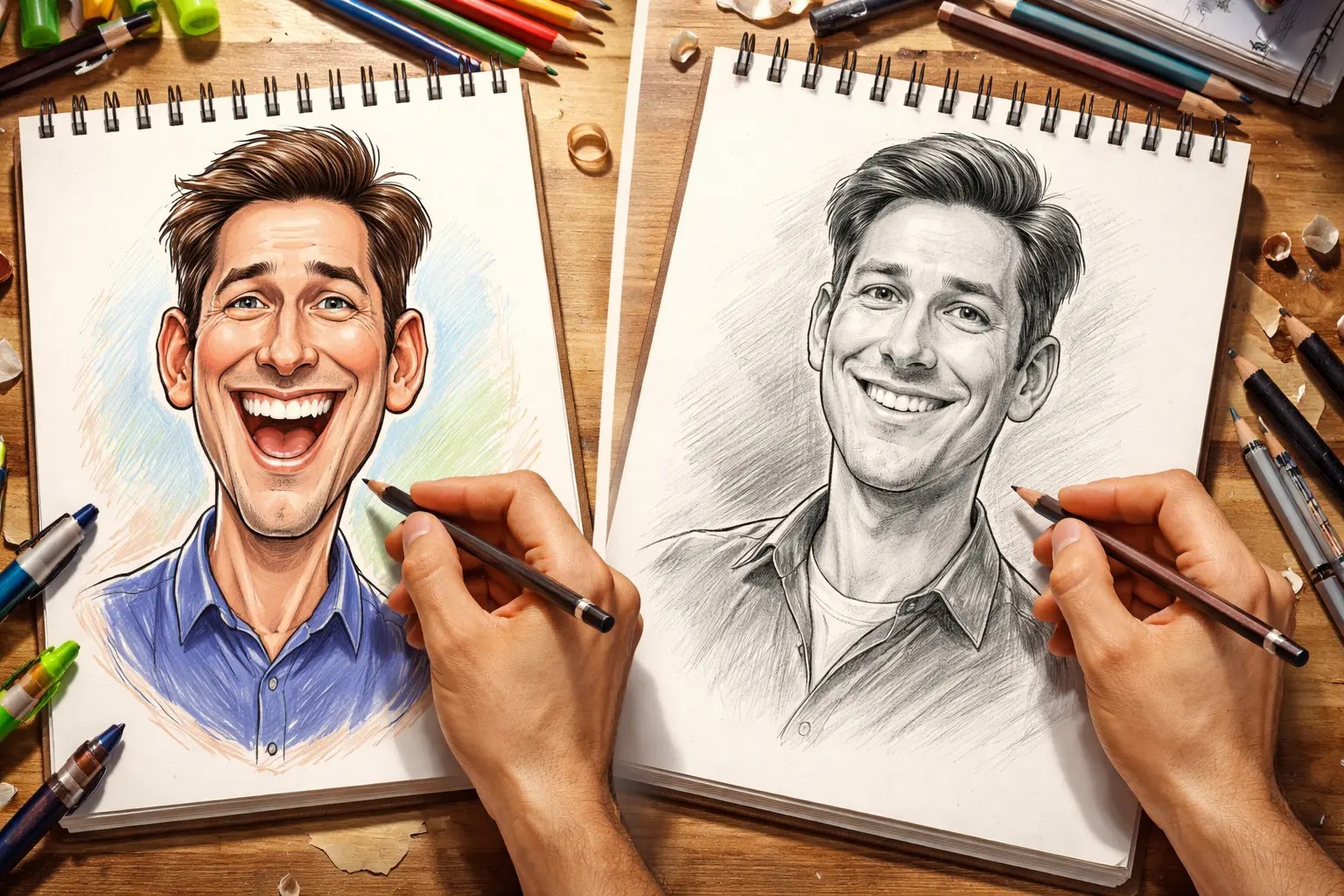
People often use the words drawing and caricature in the same way. Both involve creating images with lines and shapes. Both can use pencils, pens, or digital tools. However, these two terms do not mean the same thing.
A drawing is a broad term. It refers to any image made by hand or digital tools using lines. A caricature is a specific type of drawing. It focuses on exaggeration and humor. The artist changes certain features to create a strong visual effect.
This article explains the difference between a drawing and a caricature. It uses clear structure and simple language. Each section gives direct and useful information.
What is a drawing?
A drawing is a visual image created using lines, shapes, and shading. An artist uses tools like a pencil, pen, or stylus. The artist places marks on paper or a screen to form an image.
A drawing can show anything. It can show a person, object, place, or idea. The artist may aim for realism or imagination. The result depends on the artist’s goal and skill.
Drawings can be simple or detailed. A quick sketch is a drawing. A detailed portrait is also a drawing. Both fall under the same category.
Artists use drawing as a basic skill. It helps them plan ideas and improve observation. Many forms of art start with a drawing.
Types of drawings
Sketch drawing
A sketch drawing is quick and simple. The artist uses light lines. The goal is to capture the basic idea. Artists use sketches to plan or practice.
Realistic drawing
A realistic drawing shows subjects as they appear in real life. The artist focuses on detail, proportion, and shading. The goal is accuracy.
Abstract drawing
An abstract drawing does not follow real shapes. The artist uses lines and forms to express ideas or emotions. The viewer interprets the meaning.
Technical drawing
A technical drawing shows objects with exact measurements. Engineers and designers use this type. The goal is clarity and precision.
What is a caricature?
A caricature is a unique form of artistic expression that captures a person’s identity through exaggerated features and creative interpretation. Unlike realistic portraits, a skilled caricature artist focuses on highlighting distinctive traits such as the shape of the nose, the curve of the smile, or the size of the eyes to create a playful yet recognizable image. This artistic style often carries a lighthearted and humorous tone, making it popular at events and celebrations.
Whether drawing public figures like celebrities and politicians or entertaining guests at parties, caricatures leave a lasting impression by blending creativity with personality. Their ability to simplify and amplify key features makes them both engaging and memorable, turning simple drawings into expressive visual stories.
Key features of a caricature
Exaggeration
Exaggeration is the main feature of a caricature. The artist increases or reduces certain features. For example, a large nose may become even larger.
Simplification
The artist removes small details. The artist keeps only key features. This helps the viewer recognize the subject quickly.
Humor
Many caricatures include humor. The artist may create a playful or funny look. This adds entertainment value.
Recognition
Even with changes, the viewer can identify the person. The artist keeps important traits that define the subject.
Main difference between drawing and caricature
A drawing is a general term. A caricature is a specific type of drawing. The difference lies in purpose, style, and method.
A drawing can aim for accuracy. It can show real shapes and details. A caricature does not aim for accuracy. It changes reality for effect.
A drawing can cover many subjects. A caricature usually focuses on people. It highlights facial features and expressions.
A drawing may look serious or neutral. A caricature often looks playful or exaggerated.
Purpose of drawing vs caricature
Purpose of drawing
The purpose of a drawing can vary. The artist may want to:
- Show reality
- Practice skills
- Plan artwork
- Express ideas
A drawing supports many goals. It does not follow one fixed purpose.
Purpose of caricature
The purpose of a caricature is more focused. The artist wants to:
- Highlight unique features
- Create humor
- Make a strong impression
- Entertain the audience
A caricature uses exaggeration to achieve these goals.
Style differences
Drawing style
A drawing style can change based on the artist. Some artists use clean lines. Others use heavy shading. Some use realistic detail. Others use loose forms.
There is no single style for drawing. It depends on the subject and intent.
Caricature style
A caricature has a clear style. It uses distortion and exaggeration. The artist selects key features and increases their size or shape.
The style remains focused on strong visual identity. The viewer should recognize the subject quickly.
Skill requirements
Skills for drawing
An artist needs basic skills for drawing. These include:
- Line control
- Observation
- Proportion
- Shading
The artist learns how to represent objects correctly. Practice improves these skills over time.
Skills for caricature
An artist needs both drawing skills and observation skills for caricature. The artist must:
- Identify key features
- Decide what to exaggerate
- Keep the subject recognizable
This requires a deep understanding of facial structure. The artist must balance distortion and identity.
Tools used in drawing and caricature
Artists use similar tools for both drawing and caricature. These include:
- Pencil
- Pen
- Marker
- Digital tablet
The difference lies in how the artist uses these tools. In a drawing, the artist may focus on smooth lines and detail. In a caricature, the artist may use bold lines and strong shapes.
Digital tools also support both forms. Software allows easy editing and adjustment.
Examples of drawing and caricature
A drawing example includes a portrait that shows a person as they appear. The artist focuses on correct proportions and details.
A caricature example includes a portrait where the artist enlarges the eyes or stretches the face. The image still shows the same person but with changes.
Both images use drawing skills. The difference lies in the approach.
When to choose a drawing or caricature
An artist chooses a drawing when the goal is accuracy or study. For example, an art student may draw a still life to practice shading.
An artist chooses a caricature when the goal is humor or expression. For example, an event artist may create quick caricatures for guests.
The choice depends on the purpose of the work.
Common confusion between drawing and caricature
Many people think a caricature is not a drawing. This is incorrect. A caricature is a type of drawing.
The confusion comes from style differences. A drawing may look realistic. A caricature looks exaggerated. This creates the idea that they are separate forms.
In reality, both share the same base skill. The artist uses lines and shapes in both cases.
Benefits of learning both styles
Learning drawing helps build basic skills. It improves observation and control. It forms the foundation of art.
Learning caricature improves creativity. It trains the artist to see unique features. It also helps in quick visual communication.
An artist who learns both styles gains more flexibility. The artist can switch between realism and exaggeration.
Conclusion
A drawing is a broad form of visual art. It includes many styles and purposes. A caricature is a specific type of drawing. It uses exaggeration to highlight features and create impact.
The main difference lies in intention. A drawing may aim for accuracy. A caricature aims for expression and humor.
Both forms use the same tools and basic skills. Both play an important role in art. Understanding their difference helps artists choose the right approach for their work.
 Tech Blog